
The most important suspension component is the one nobody talks about
Classic Porsche owners will happily invest thousands in suspension upgrades, damper rebuilds and chassis development. Yet the component with the greatest influence on how a car feels is often overlooked entirely. The tyre.
When a classic Porsche arrives at Center Gravity, we're often asked about dampers, ride heights, torsion bars and geometry settings. But one of the biggest influences on how the car drives is usually sitting right underneath it.
The tyres.
In many cases, the tyres fitted to classic cars are either significantly older designs or replacements chosen simply because they fit the wheel.
The result?
The suspension can only work with the information the tyre provides.
A beautifully rebuilt suspension system fitted with the wrong tyre is a little like listening to a high-end hi-fi through a poor-quality speaker. The suspension may be doing everything correctly, but the tyre is still the only part of the car that actually touches the road.
Why are classic cars often found on older tyre designs?
The answer is usually good intentions. Many owners want to preserve originality and period appearance. For years there were limited options available in classic sizes, so tyres such as the Bridgestone S-02 became popular because they offered modern performance while remaining available in the correct dimensions.
The challenge is that tyre technology doesn't stand still. Rubber compounds evolve. Construction techniques improve. Manufacturers learn more about wet grip, heat management, ride quality and steering response.
A tyre that was considered state-of-the-art twenty years ago may no longer represent the best option available today.
Sometimes progress looks backwards
One of the more interesting aspects of classic tyre selection is that the new tyre isn't always the newest design available.
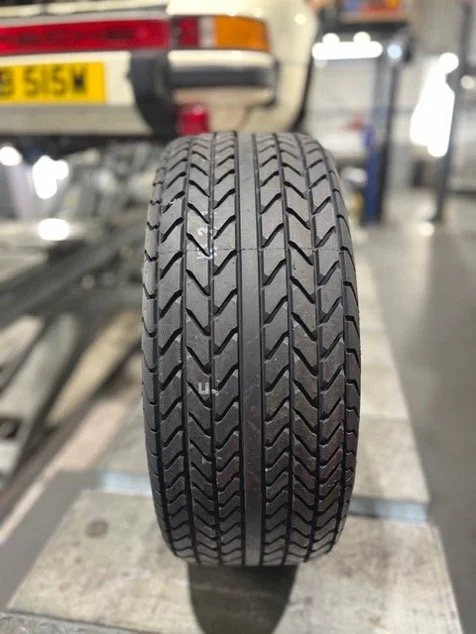
Take the Pirelli Cinturato P7.
The original P7 first appeared in 1974 and became one of the defining performance tyres of its era, fitted to many of Europe's most desirable sports cars. On paper, choosing a tyre with roots stretching back over 50 years might seem like a step backwards compared to fitting a modern ultra-high-performance tyre.
In reality, the opposite is often true.
Today's Pirelli Cinturato P7 Classic retains the appearance and character of the original design but benefits from decades of development in rubber compounds, construction technology and manufacturing techniques.
The tread pattern may be period-correct. The engineering behind it certainly isn't.
In fact, Porsche's current homologated version of the Pirelli P7 Classic carries an N4 approval. Achieving that approval involves far more than simply reproducing a historic tyre design. As with modern Porsche tyre development programmes, the tyre undergoes extensive testing using representative vehicles from the period. Porsche tyre specialists and development drivers assess steering response, stability, ride quality, wet-weather performance and overall vehicle balance before a tyre can receive an N-rating.
Porsche's approval process evaluates tyres against dozens of criteria to ensure they complement the characteristics of the vehicle they are intended to serve. The result is a tyre that respects the original driving experience while benefiting from modern development standards.
For many classic Porsche owners, that's exactly the point. The objective isn't to make the car feel like a modern GT3. It's to preserve the qualities that made the car special in the first place while benefiting from everything tyre technology has learned since.
Not all modern tyres suit classic cars
This is where things become interesting. The answer isn't simply fitting the newest tyre available. Classic Porsche suspension was designed around tyres with very different characteristics to modern ultra-high-performance tyres. Fit something with an overly stiff sidewall or aggressive construction and the car can lose some of the compliance, feedback and progression that makes it enjoyable on the road.
The goal isn't maximum grip. The goal is balance. A tyre must work with the suspension, not against it.
Every tyre changes the car
One of the most overlooked aspects of chassis tuning is that changing tyres changes the entire setup.
Steering weight changes.
Response changes.
Slip angles change.
Ride quality changes.
Even the geometry settings that work best can change.
This is why there is rarely a universal best tyre. The best tyre depends on how the car is used, what the owner values and how they want the car to feel.
A hillclimb and sprint regular, a continental tourer and a Sunday morning B-road car may all require something different despite sharing the same model designation.
The right tyre should disappear
The best tyres rarely announce themselves.
They simply allow the car to feel natural, predictable, progressive and confidence inspiring.
When a classic Porsche feels light, alive and intuitive beneath you, that's often the result of countless small decisions working together. The tyre is one of the biggest. And despite being the only part of the car touching the road, it's often the last thing people think about.
Until they drive the car on the right set.
This particular 911 arrived wearing Bridgestone S-02s and leaves on a fresh set of Pirelli Cinturato P7 Classics.
At first glance, it's simply a tyre change.
In reality, it's a reminder that the most important suspension component is often the one nobody talks about.
How we can help
If you're considering replacing the tyres on your classic Porsche but aren't sure which direction to take, we're always happy to discuss the options.
For period-correct and heritage tyres, Longstone Tyres remain our preferred supplier thanks to their knowledge of classic applications and the range they offer. Once the right tyre has been selected, we can supply and fit it in-house before carrying out the geometry to ensure the chassis is working in harmony with the new tyres.
Because changing the tyre is only half the story. Making the car work properly with it is where the real difference is made.